

Wild Mushrooms & Foraging
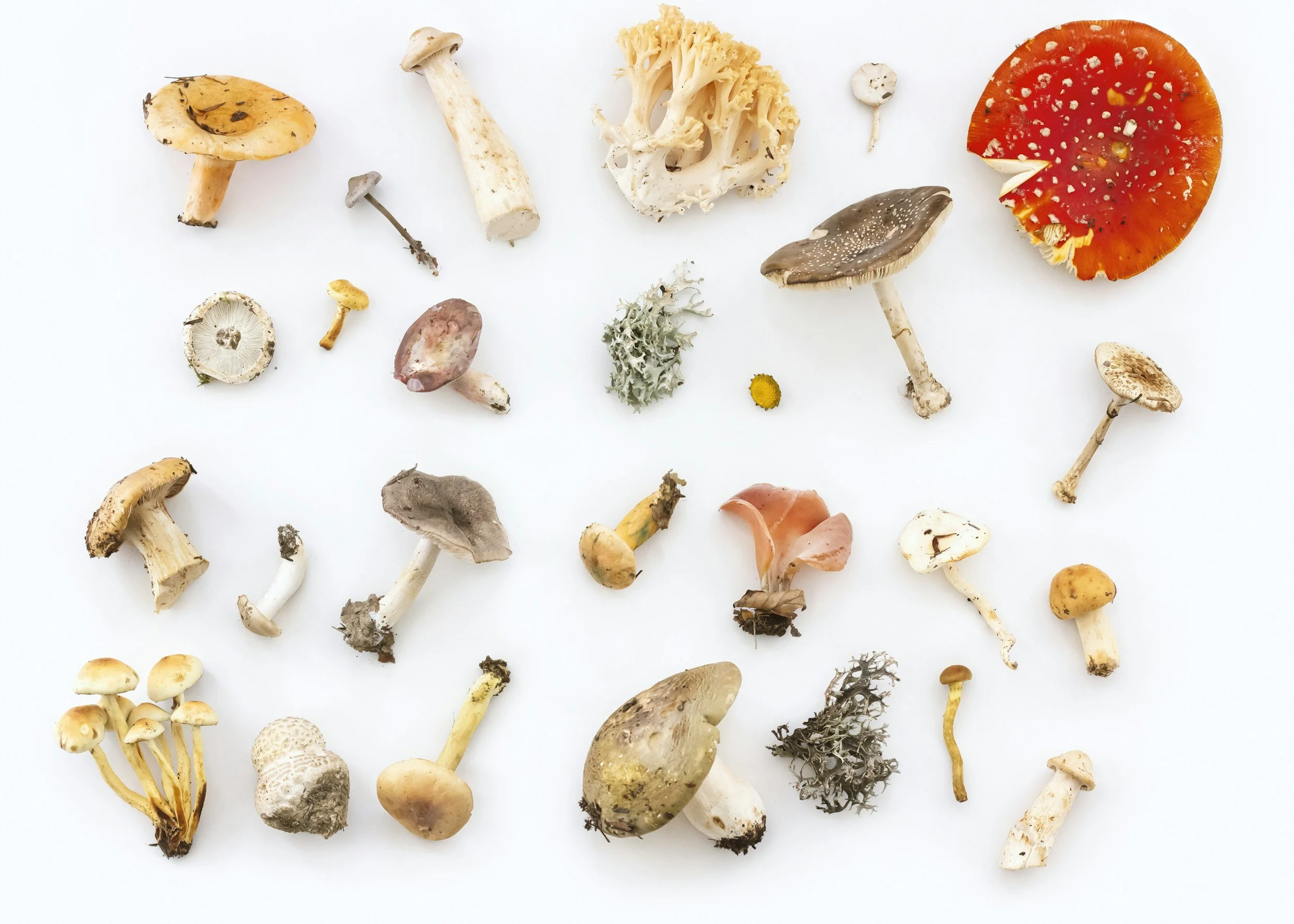
FORAGING IN SOUTHEAST LOUISIANA
Resource Guide
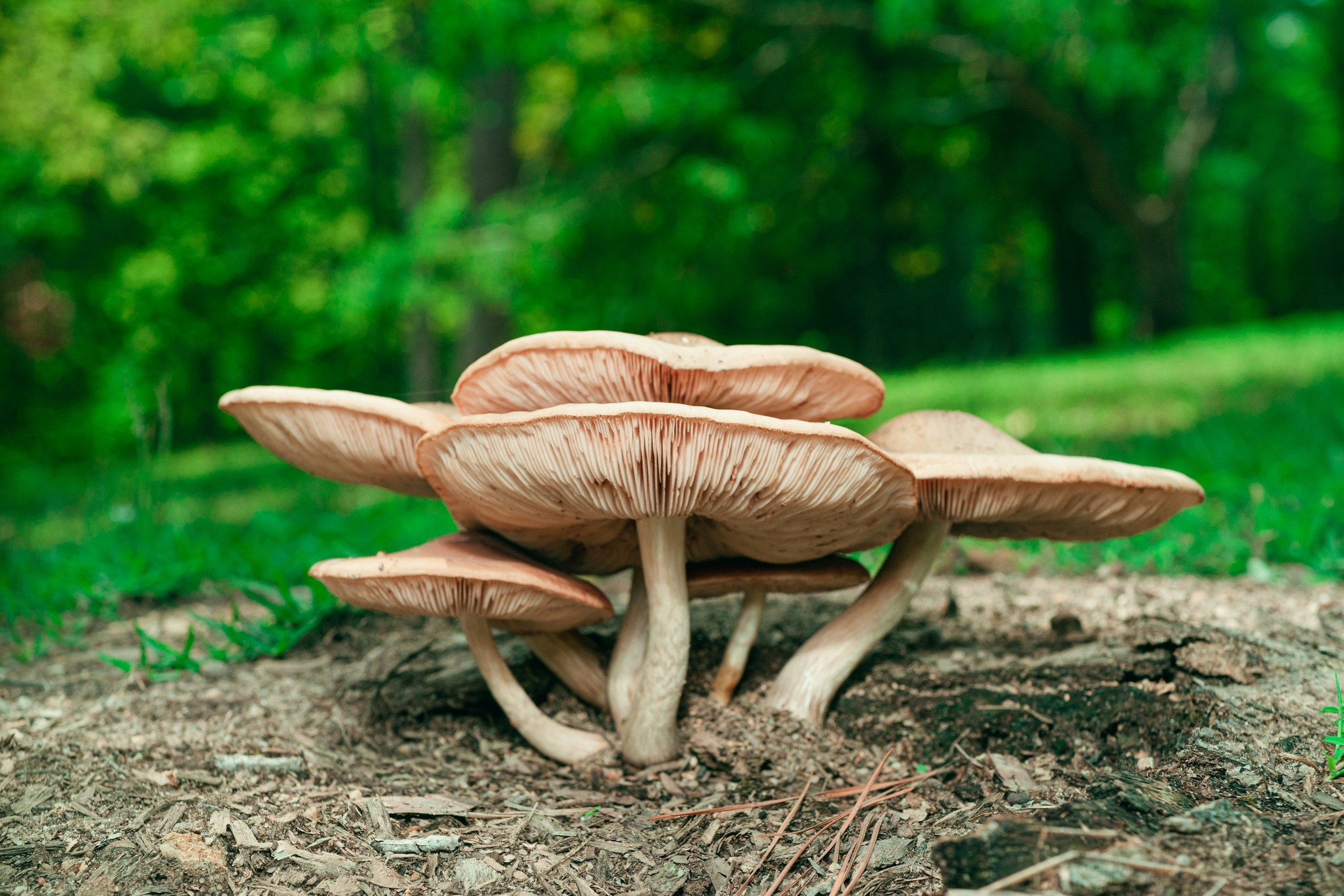
Introduction
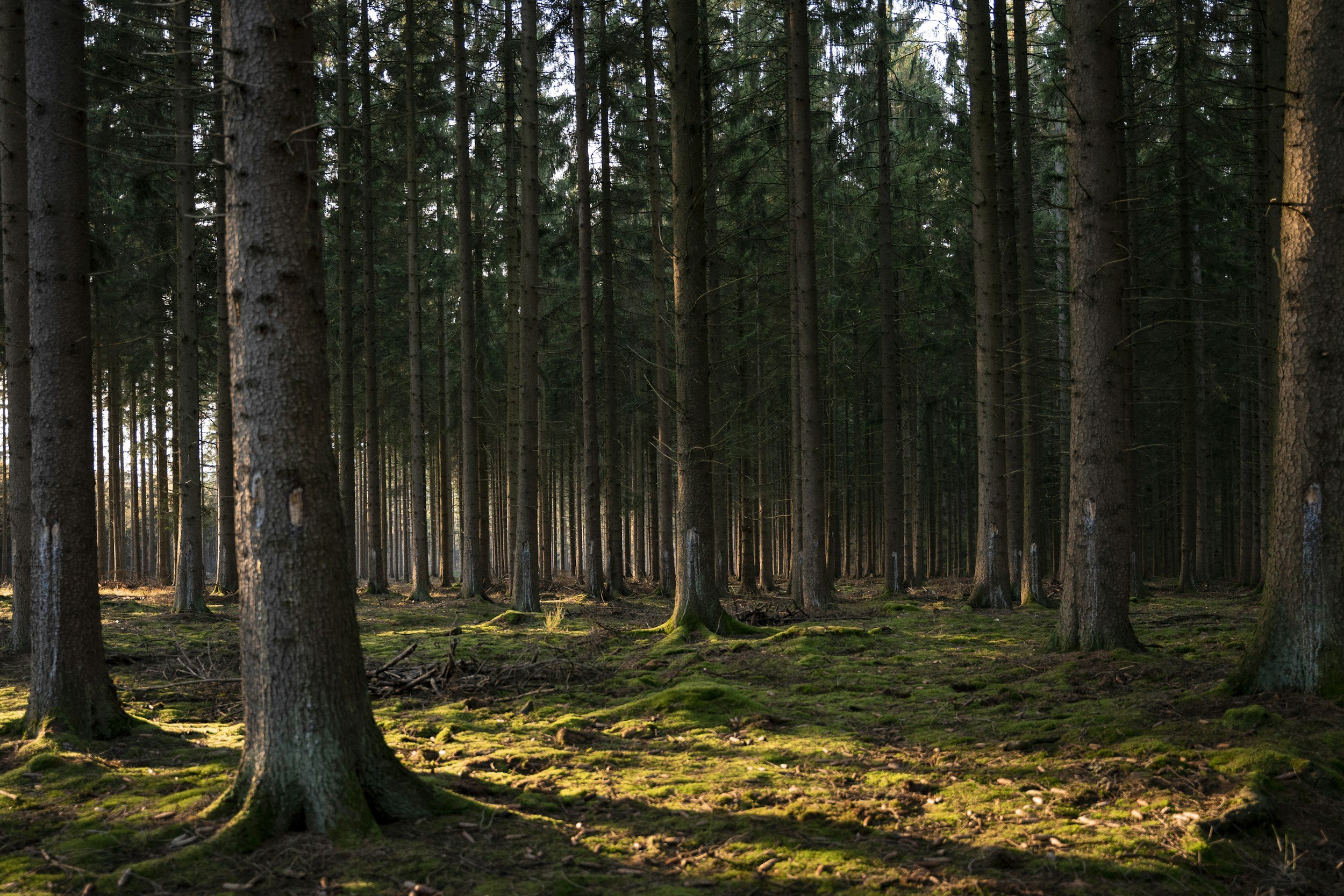
Southeast Louisiana offers a unique foraging area with the Mississippi River depositing much more than soil along its banks, tributaries, bayous and floodplains. With old growth pine and oak forests, and everything between we have a very rich and bountiful foraging area available to us. I find that Wildlife Management Areas are a wonderful resource if you can get out there. Urban foraging is much more localized.
Often riverbanks, lots left to go feral, sometimes places as simple as a fence line that isn’t mowed often. Sometimes a dead tree that has not been cut down. If an area is left alone long enough, the seeds in the soil and the deposits from local critters will return it into a forage ready area within as few as one season. Edible mushroom spores are often cast as far as the wind will blow. Often wild plants and mushrooms need only an opportunity to grow without being disturbed much.
Before You Forage:
Know Your Mushrooms
A Cautionary TaleHunting wild mushrooms requires caution. Some wild mushrooms contain toxins capable of causing severe illness or death, and appearance or growing location alone cannot reliably determine whether a mushroom is safe to eat.
Learn the LookalikesFungi lookalikes are absolutely something you should learn as you study edible mushrooms. Knowing toxic fungi will serve you well as you seek to identify your quarry—and may save you from accidental poisoning or a trip to the ER.
Never Rely on a Single Identification MethodDo not taste an unidentified mushroom to determine whether it is edible. Before eating any wild mushroom, identification should be confirmed using multiple characteristics and a reliable regional field guide or, preferably, an experienced local mycologist or mushroom-identification group.
Mushrooms You May Encounter
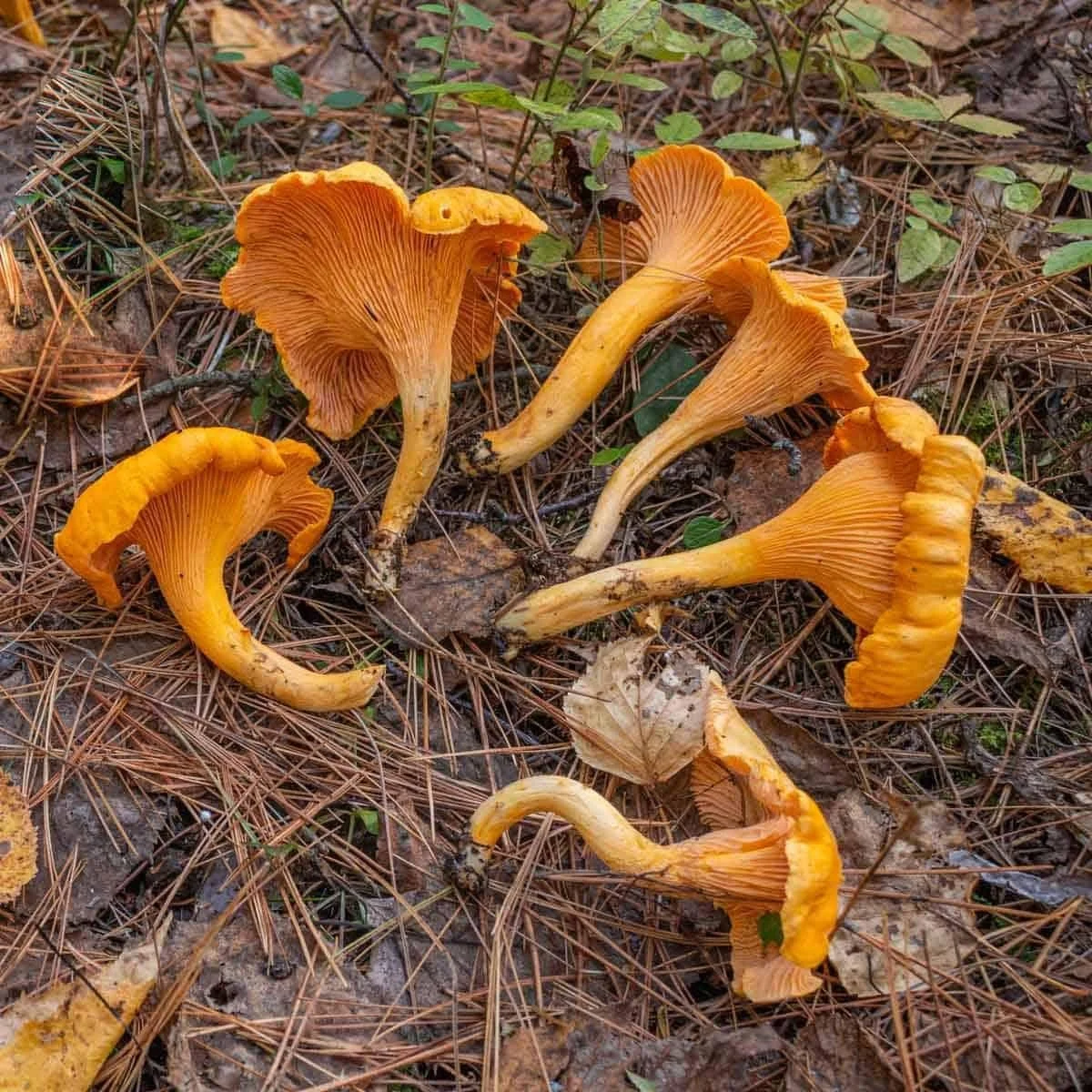
Chanterelles
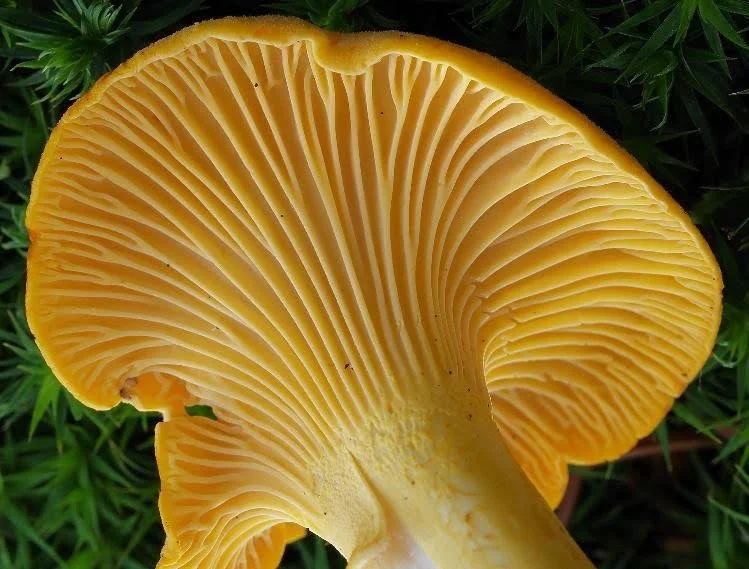
Chanterelle mushrooms are fruiting bodies with growth connections underneath the soil within the mycelial mat. We find chanterelle mushrooms by looking for the environment they like: old-growth forests, under the tree canopy, amongst shaded grass.
Often the mycelium will reach for the high points of ridges, with fruiting bodies appearing down the lower levels following gentle rain.
When to Look
Chanterelles are often found around the same time as blackberries are getting ripe—around late June—and through the hottest parts of the summer following rain and mist, into late September.
Chanterelles are prized as an edible mushroom, but several mushrooms can resemble them. Always positively identify your find before consuming it.
Cantharellus
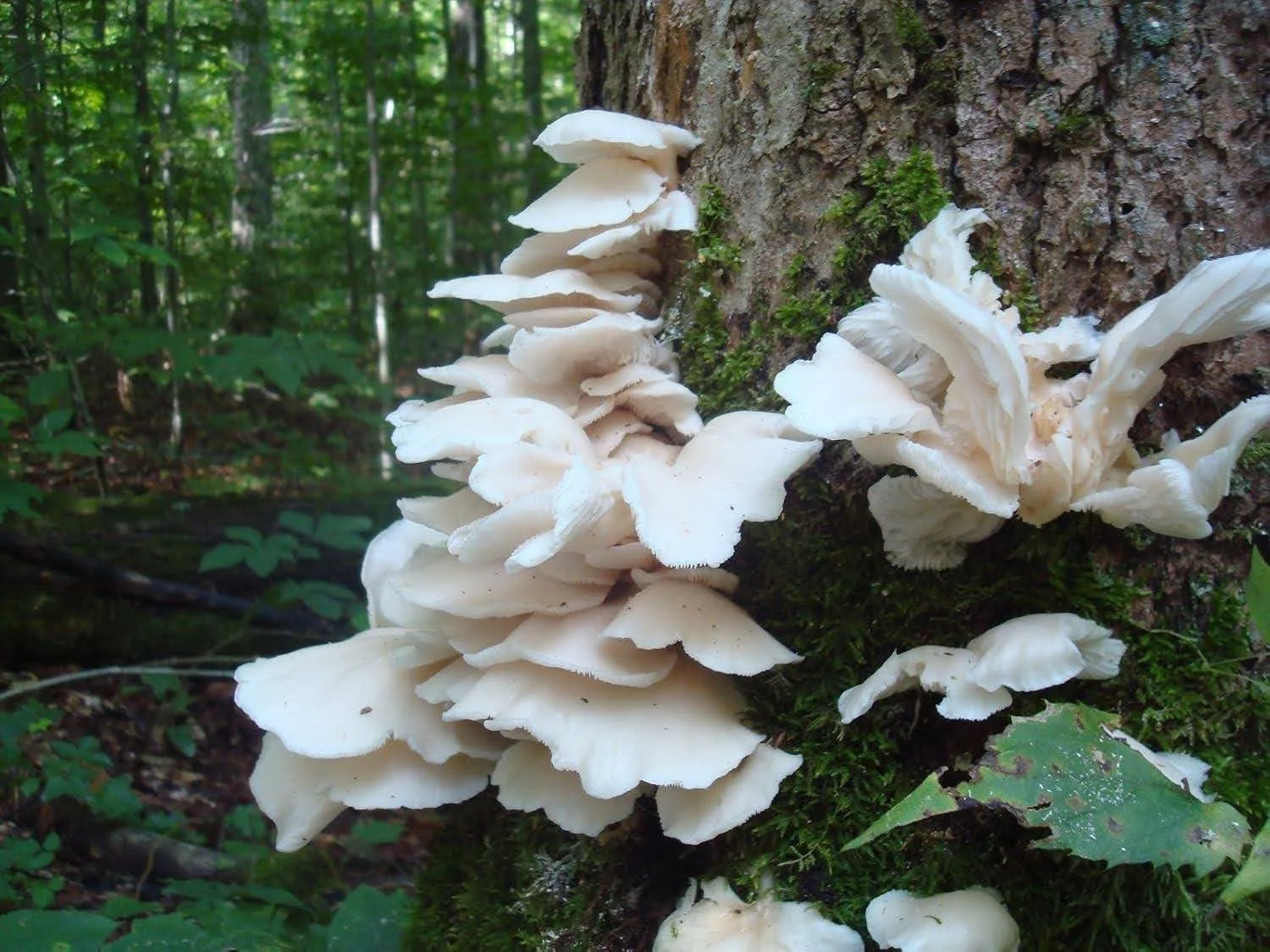
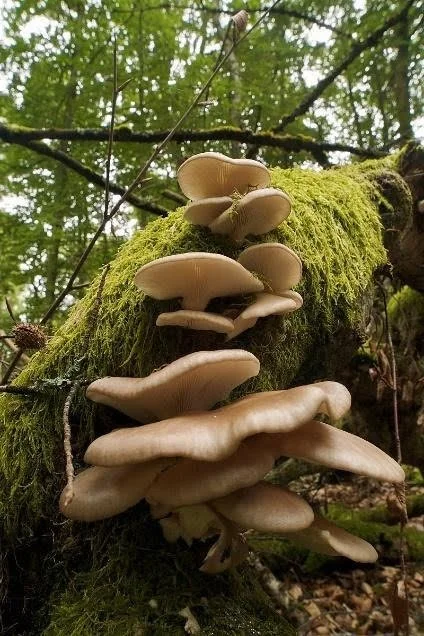
Oyster Mushrooms
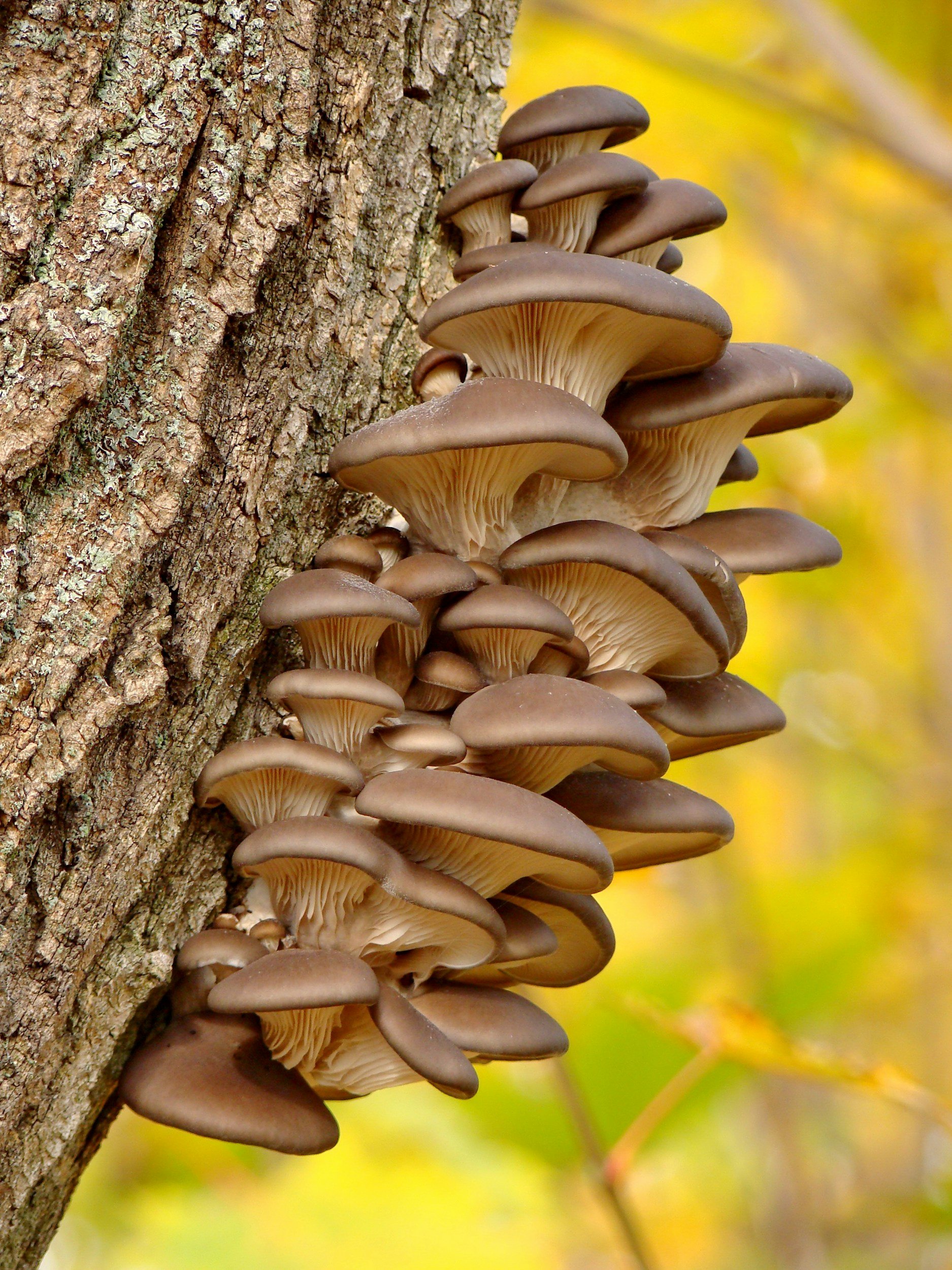
Oyster mushrooms are fruiting bodies with the mycelium usually gathering under the bark of fallen trees. They like trees that are not rotten and have bark that isn’t falling off yet. Often, a large broken branch connected to a fallen tree is a very good place to find them.
It’s always about timing—mushrooms can quickly become buggy and begin to rot.
Where & When to Look
There are several species of oyster mushrooms with different tolerances and needs. They can appear throughout the year, but certain species are particularly common during cooler periods following gentle rains.
This forager especially enjoys fresh, young oyster mushrooms found on hardwoods during the cooler months.
As with all wild mushrooms, confirm the species before eating; growing on wood or resembling an oyster mushroom does not by itself establish that a mushroom is edible.
Pleurotus
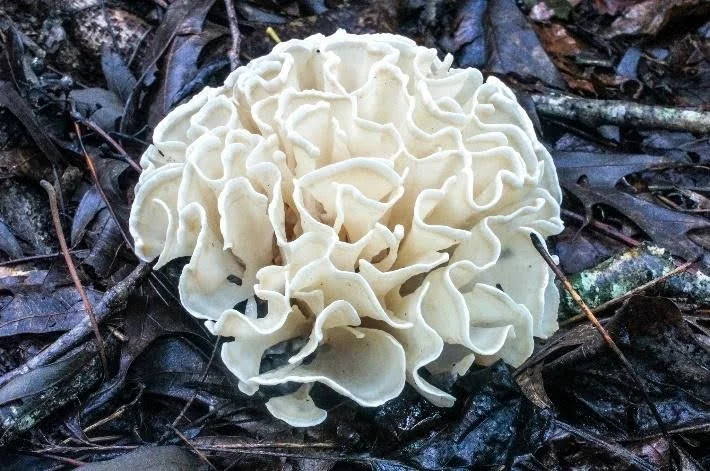
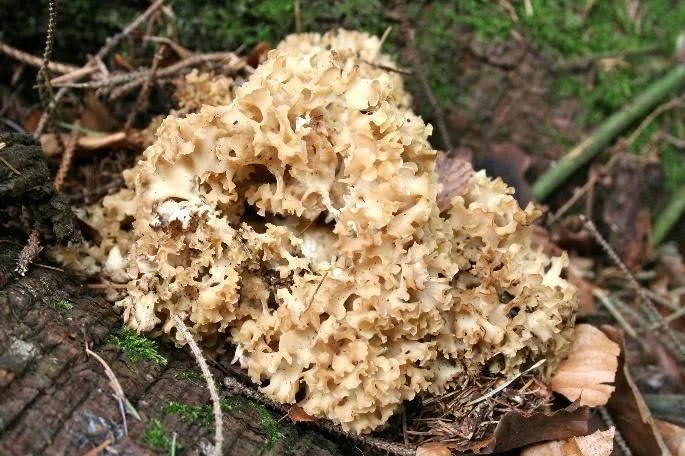
Cauliflower Mushroom
Sparassis is a super interesting fungus often called the cauliflower mushroom because of its distinctive growth pattern.
This beautiful fungus is associated with trees and their roots and can appear to grow from wood that is submerged underneath the soil—old roots, old fallen trees, and similar environments.
In the Kitchen
Once a specimen has been positively identified as an edible Sparassis species, its branching structure can make an interesting addition to the kitchen. The outer portions can be trimmed into noodle-like pieces and incorporated into dishes with cream sauce, white wine, wild garlic, pepper weed, chanterelle mushrooms, and diced onions.
When to Look
These mushrooms are generally found during late summer into the fall months.
Sparassis
Russula
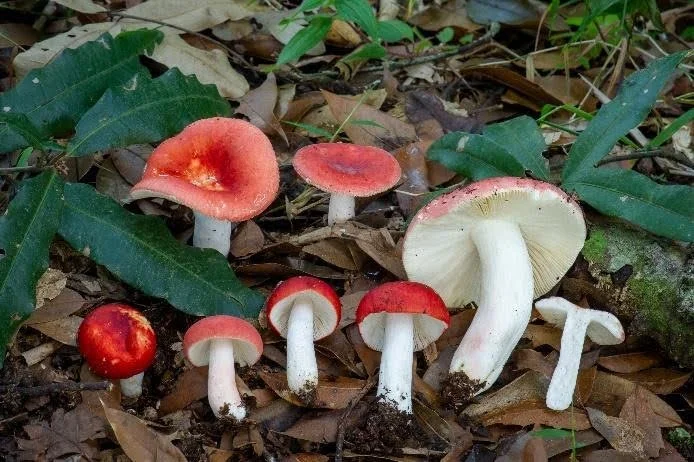
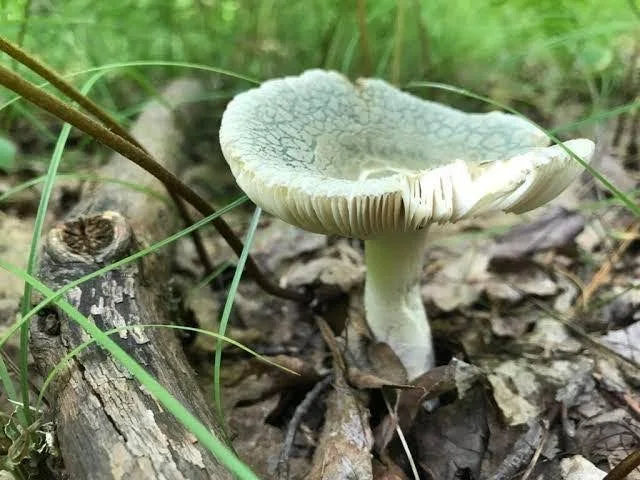
Russula is a large and diverse genus containing many different species. They can often be recognized by their strikingly colored caps contrasted with pale or white gills and stems.
Dark reds, pinks, greens, and other colors can all occur within the genus, making them beautiful mushrooms to encounter while foraging.
When to Look
These fungi can be common from mid-spring into late fall.
Identification Matters
Because Russula contains numerous species and edibility cannot safely be established by cap color or taste alone, identification should be confirmed before any mushroom is consumed. Do not use the “nibble and spit” method as a substitute for positive identification.
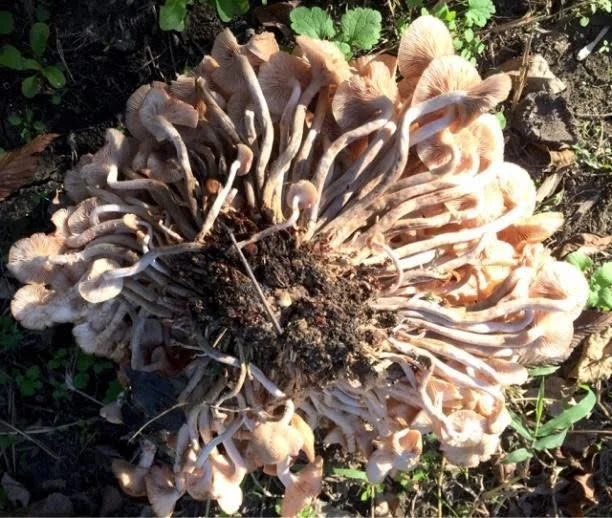
Ringless Honey Mushroom
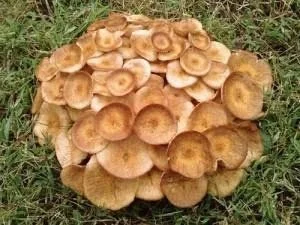
These parasitic fungi can thrive among stressed hardwood trees. Their presence may indicate that a tree or its root system is experiencing significant decay or disease.
If you see large fruitings around a tree, be aware of the condition of the tree and of potentially weakened or falling branches, particularly on windy days.
What to Look For
Ringless honey mushrooms characteristically appear in dense clusters associated with buried wood or tree roots, which can make them look as though they are growing directly from the ground.
Because clustered ground-growing mushrooms have potentially dangerous lookalikes, positive identification is particularly important before considering consumption.
Desarmillaria caespitosa
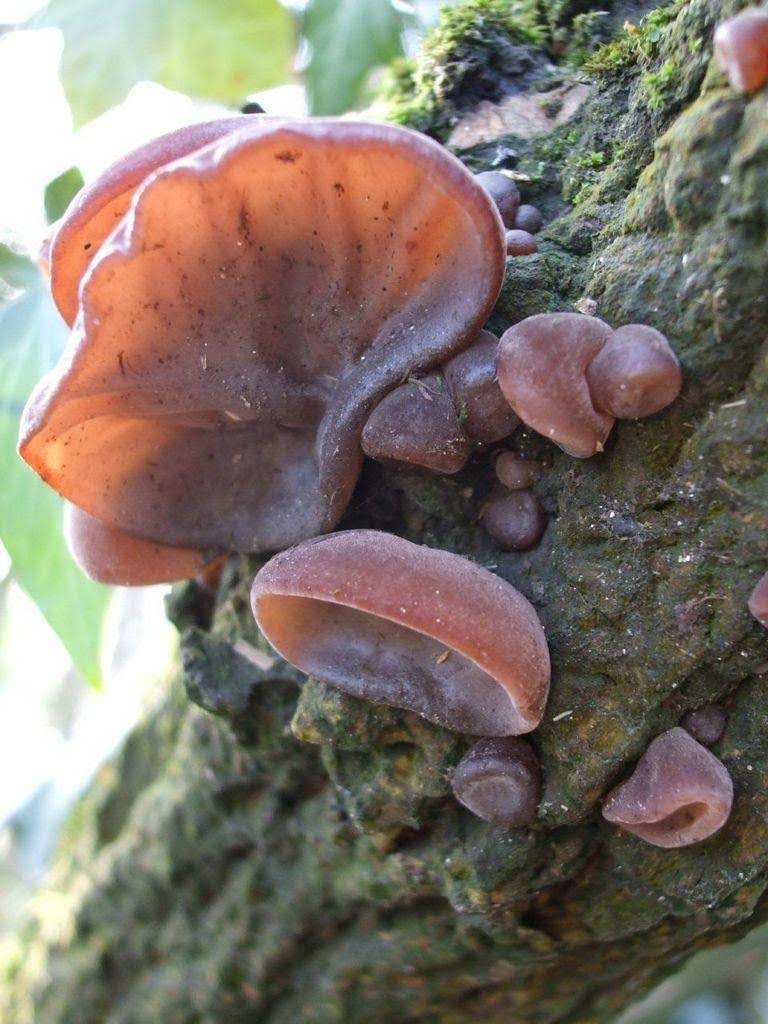
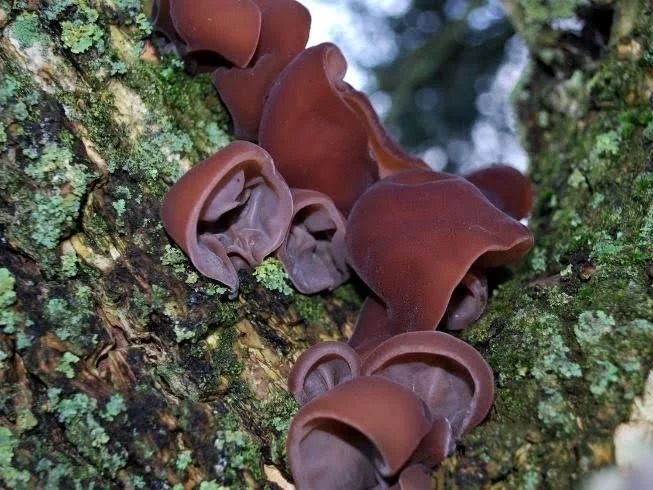
Wood Ear Mushroom
Found on the bark of trees during and after sustained rain, wood ear mushrooms have a distinctive, delicate, brown, ear-like appearance.
These fungi can appear throughout the year when conditions provide enough moisture. They can also be dried and later rehydrated.
In the Kitchen
Properly identified edible wood ear species are popular in Chinese cuisine and are known for their crunchy texture and ability to soak up flavors. On their own, they have relatively little flavor.
Wood ear mushrooms are a classic ingredient in dishes such as hot and sour soup, stir-fries, and mu shu pork.
Forage Responsibly
Wild foraging is an opportunity to better understand the forests, waterways, seasons, and foodways of Southeast Louisiana—but knowing what not to harvest is just as important as knowing what to harvest.
Never consume a wild mushroom based solely on a photograph, color, common name, growing location, or information from this guide. Confirm identification with trusted regional resources and experienced mushroom identifiers before eating anything you collect.
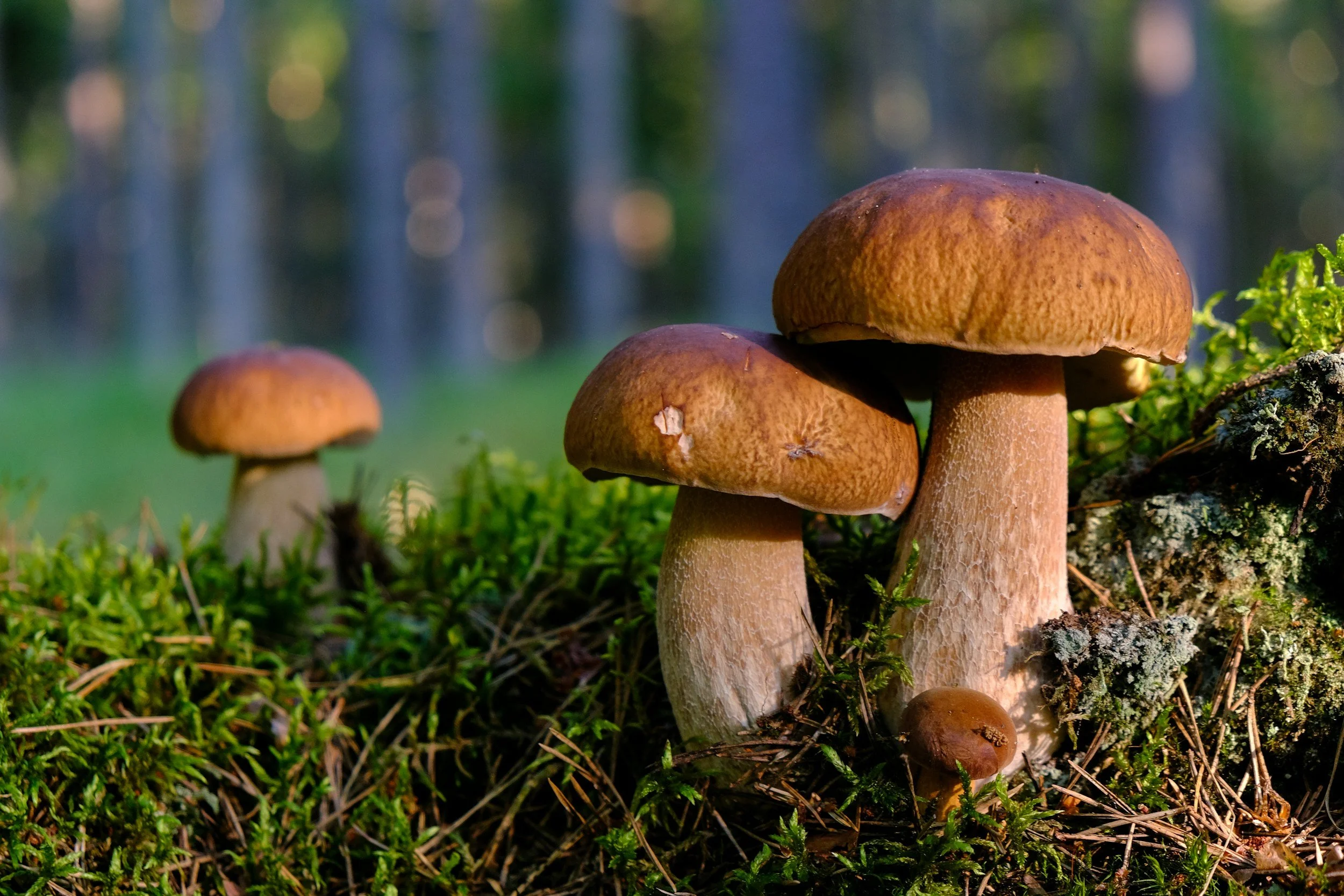
A Few Things to Remember
Learn edible mushrooms and their toxic lookalikes.
Avoid mushrooms that are old, decaying, or insect-damaged.
Confirm that foraging is permitted before collecting on public or private land.
When you aren’t completely certain of an identification, leave it where it grows.
Never taste an unidentified mushroom as an identification test.
Harvest thoughtfully and leave plenty behind.
Keep Exploring
There’s always more to discover about the food growing around us.